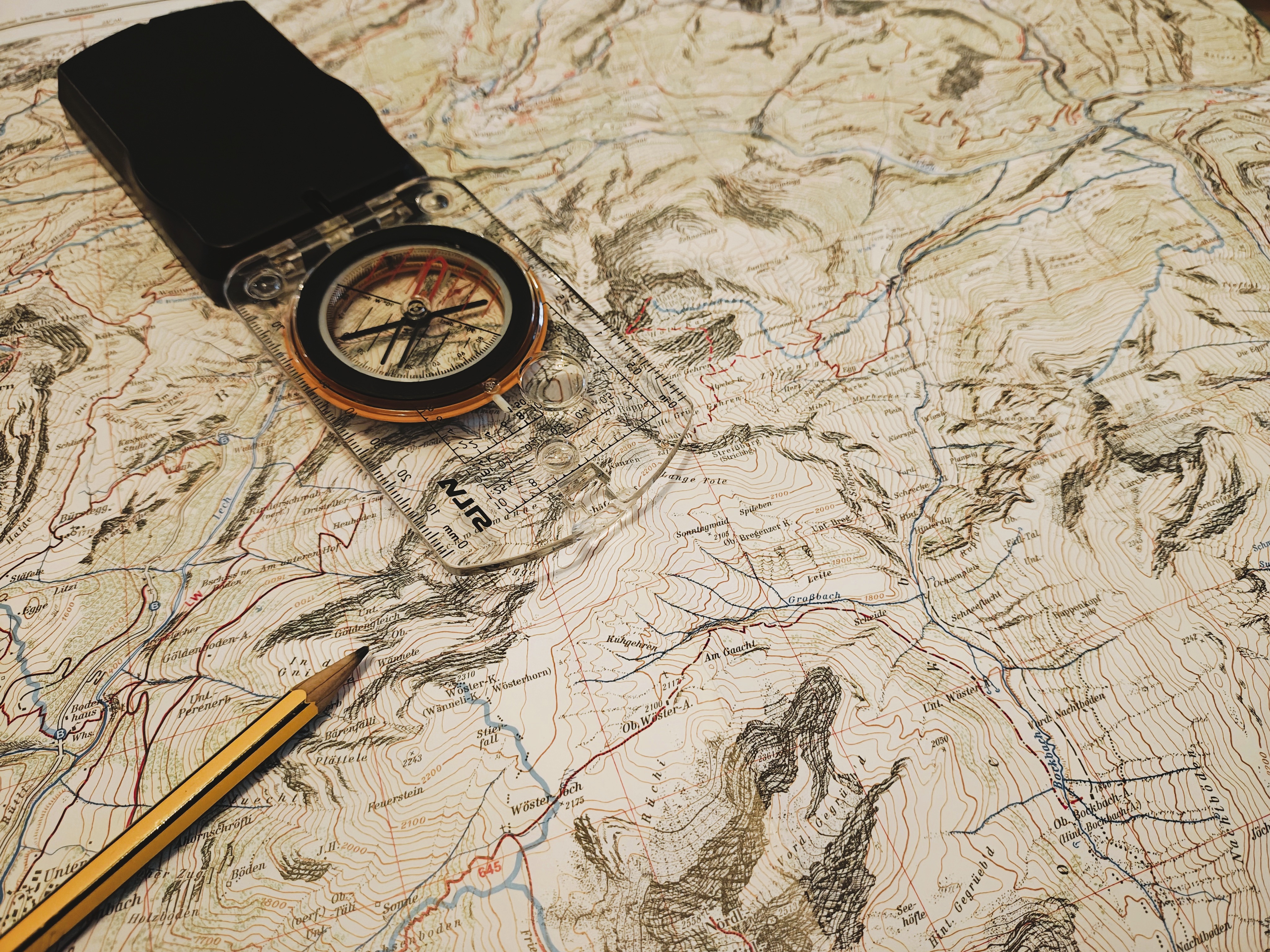
When you have spent years lost in the dungeons of panic, the only thing you ask for is a map. It doesn't matter if it's an ugly one, badly drawn, covered in crossings-out. You just want to know the way out.
My map carries a technical name: cognitive behavioural therapy. It sounds solemn, complicated, full of jargon. The reality is that it fits in a single sentence.
Face your fear. Again and again. Until it stops being fear.
That's all. Seriously. The hard part is not understanding it, but doing it. And it is VERY hard when panic has you in its grip.
Why it works
Imagine you are about to skydive for the first time. You are at the edge of the plane. Your body enters legitimate panic: we did not evolve to jump into the void, so the brain does exactly what it is supposed to do. Heart racing. Adrenaline through the roof. Nausea. Trembling hands. Cold sweat. Your head screaming at you what the hell are you doing?
You jump.
The second time, the symptoms are smaller. The fifth, manageable. Ask someone with five hundred jumps behind them what they feel when they leap, and they will tell you: almost nothing. They wave and jump. Their brain has learned that this situation, however strange it seems to the nervous system, is not going to kill them. It has filed it under mundane.
That is exactly what CBT does with your fear. It exposes you to it, in a controlled and repeated way, until your brain recalibrates. It is not about reasoning with fear. Fear does not listen to reasons; trying to reason with it feeds it. It is about proving to the brain, with facts, that the feared situation is not dangerous.
That is why the verb matters so much: face, not avoid. If being alone in the forest terrifies you, you must go to the forest and stay there alone. If the high-speed train to Madrid terrifies you, you must take the train to Madrid tomorrow. If germs terrify you and you clean compulsively, you must leave the house uncleaned for a few days. Every time you avoid, you confirm to your brain that the danger was real. Every time you face it, you teach it the opposite.
The pulse
In my case, the central fear was a heart attack. Especially while doing sport. So my brain had developed a brilliant solution: taking my pulse at all hours. If it was slow, I wasn't going to die.
How slow was slow? Well, it depended. Some days 60 was reassuring. Others, if I noticed it at 70 while sitting down, I already believed something was wrong. During one panic attack I remember hitting 100 while on a work call, checking it non-stop. And if it dropped to 50? Then it was so slow that I was also going to die.
Is there any known clinical relationship between taking your pulse on the sofa and predicting a heart attack? No. What existed was a sick vigilance, with shifting rules, always in the service of fear. A compulsion.
My therapy, on that front, was brutally simple: stop taking my pulse. One day. Two. Three. Accepting uncertainty, because that intolerance of uncertainty was the true root of the problem. I needed to know, every single second, that everything was perfectly fine. And the body does not work like that. It never has. Nobody has that certainty.
Every time I took my pulse, I was telling my brain: this organ is dangerous, watch it. Every time I managed not to, I was telling it the opposite: nothing is wrong, carry on with your day. The message your brain receives depends on your actions, not your thoughts.
This takes time
How long did it take me to live without taking my pulse? Three.
Three days... No. Three years.
I say it plainly because I believe it is one of the most useful things I can share. Self-help books sell the idea that this gets solved in six sessions. Some manuals talk about twelve weeks. I won't lie: you can improve a great deal in that time. But truly reformatting a brain that has been running on fear for years is not a matter of weeks. It is a matter of years of practice, relapses, adjustments, and starting again.
It is also true that the better you apply yourself, the sooner you will get there. I have not been the best student.
And one more thing worth remembering: once you manage to cut off that first compulsion, other fears may come to the surface. As they appear, you will have to take them one by one, always facing them. Always following the golden rule.
The good news is that you are going to make it. The less good news is that you are going to need patience. A lot of it. And if at any point someone tells you that you'll be cured in three weeks, be suspicious.
If you are in it
If there is something you don't want to do because it scares you, because it makes you anxious, because you fear what might happen: do it. Calmly, with a therapist by your side if you can, in steps of whatever size you can tolerate — but do it. There is no other way. That is the entire map.
If you want to go deeper, here I explain why trying to reason with anxiety doesn't work, and here, why surrendering to the sensations is exactly the opposite of giving in to them.
Tell me in the comments what your fear is. And if you already faced it, tell me how you did it. Sometimes reading how someone else did it is what a person needs to begin.
One step, then another, then another. That is how, eventually, the Morgenrot arrives.
A hug.